
How many solar panels do I need for a 10kW solar system? The answer depends on the wattage of the panels you choose. For example, a 10kW array needs about 19 panels rated at 550W, 18 panels at 580W or 585W, 17 panels at 600W, or 16 panels at 650W. The exact design should also account for the inverter, roof space, shading, electrical design and whether the 10kW figure refers to DC panel capacity or AC inverter capacity.
For homeowners and businesses in Pakistan, choosing the right panel count is important because a higher-wattage panel can reduce the number of modules required without necessarily reducing the overall system cost by the same amount.
Table of Contents
- How many solar panels are needed for a 10kW system?
- How to calculate the number of panels for 10kW
- 10kW solar panel calculation by wattage
- How many 550W panels for 10kW?
- How many 580W panels for 10kW?
- How many 585W panels for 10kW?
- How many 600W panels for 10kW?
- How many 650W panels for 10kW?
- How much roof space does a 10kW system need?
- How much electricity can a 10kW system produce?
- Does a 10kW system need a 10kW inverter?
- What should Pakistani buyers consider in 2026?
- Common mistakes when buying a 10kW solar system
- Frequently Asked Questions
- Final takeaway
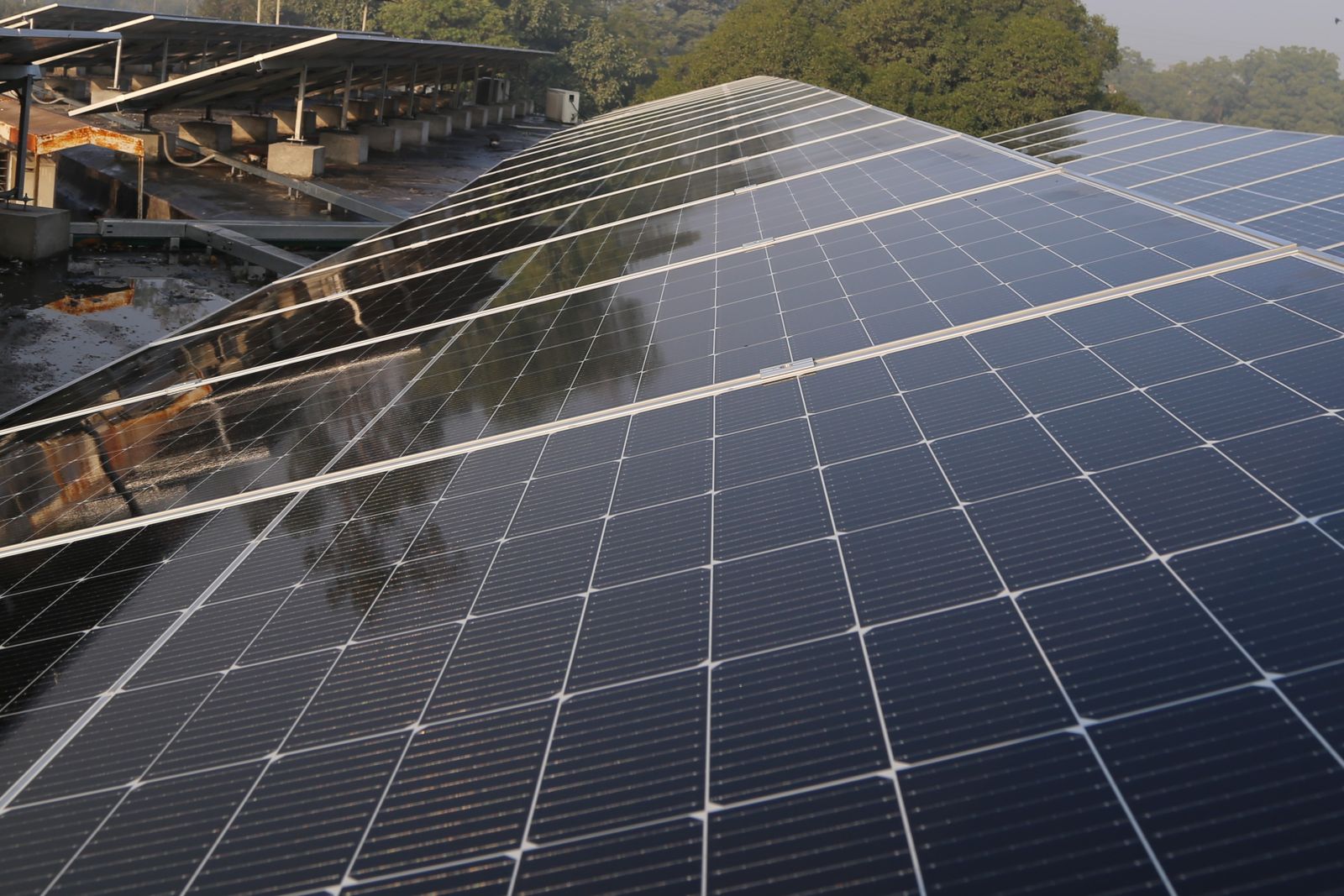
How Many Solar Panels Are Needed for a 10kW System?
Short answer: A 10kW solar array requires approximately 19 panels rated at 550W, 18 panels rated at 580W or 585W, 17 panels rated at 600W, or 16 panels rated at 650W if you want the combined panel capacity to reach or slightly exceed 10kW. The final design can differ because the inverter and system configuration also matter.
| Panel Wattage | Panels to Reach or Exceed 10kW | Total Panel Capacity |
|---|---|---|
| 450W | 23 | 10.35kW |
| 500W | 20 | 10.00kW |
| 550W | 19 | 10.45kW |
| 580W | 18 | 10.44kW |
| 585W | 18 | 10.53kW |
| 600W | 17 | 10.20kW |
| 615W | 17 | 10.46kW |
| 650W | 16 | 10.40kW |
| 700W | 15 | 10.50kW |
The calculation is simple: divide 10,000 watts by the wattage of one panel and round up to a whole panel. Modern Pakistani solar installations commonly use panels around the 550W–650W range, so the practical answer is often around 16–19 panels.
How to Calculate the Number of Panels for a 10kW Solar System
The basic formula is:
Number of panels = Required system capacity in watts ÷ panel wattage
For a 10kW system:
10kW = 10,000 watts
For example, if you choose a 580W solar panel:
10,000 ÷ 580 = 17.24
Because you cannot install 0.24 of a panel, you would normally use 18 panels if the goal is to reach or exceed 10kW of panel capacity.
However, there is an important distinction between the panel array’s DC capacity and the inverter’s AC capacity. Solar PV modules are rated under standard test conditions, while an inverter converts the panels’ DC electricity into AC electricity. Therefore, a system marketed as a “10kW solar system” does not necessarily mean that the panel array and inverter are both exactly 10.00kW.
The National Renewable Energy Laboratory explains that PV modules are rated in DC terms while inverters have AC capacity ratings, and the relationship between the two is an important part of system design.
10kW Solar Panel Calculation by Wattage
The panel wattage has a direct effect on the number of modules required. Higher-wattage modules can reduce the number of panels needed for the same nominal array capacity.
| Panel Size | Calculation | Approx. Panel Count |
|---|---|---|
| 450W | 10,000 ÷ 450 | 23 |
| 500W | 10,000 ÷ 500 | 20 |
| 550W | 10,000 ÷ 550 | 19 |
| 580W | 10,000 ÷ 580 | 18 |
| 585W | 10,000 ÷ 585 | 18 |
| 600W | 10,000 ÷ 600 | 17 |
| 615W | 10,000 ÷ 615 | 17 |
| 650W | 10,000 ÷ 650 | 16 |
| 700W | 10,000 ÷ 700 | 15 |
These figures are mathematical panel-count calculations rather than a recommendation for a particular panel brand or model. The actual design should be checked against the inverter’s maximum PV voltage, current, MPPT range and permitted DC input capacity.
How Many 550W Panels Are Needed for a 10kW System?
Short answer: You need 19 × 550W panels to reach or exceed 10kW of DC panel capacity. Nineteen panels produce a nominal array size of 10.45kW.
If the design intentionally keeps the array below 10kW, 18 × 550W panels produce 9.90kW. Whether 18 or 19 panels is appropriate depends on the inverter specification and the installer’s system design.
550W modules remain relevant in Pakistan, although higher-wattage modules are also widely available. The advantage of choosing a higher-output module is primarily the reduction in panel count and potentially the space required for the array.
How Many 580W Panels Are Needed for a 10kW System?
Short answer: You need 18 × 580W panels to reach or exceed 10kW. The resulting DC array is 10.44kW.
Seventeen 580W panels produce 9.86kW, so an installer may use 17 panels when the system is designed around a slightly smaller DC array rather than trying to exceed 10kW.
This is why two installers can quote different panel counts for what they both call a “10kW system.” The difference does not automatically mean one quotation is incorrect; the panel wattage and DC/AC design need to be compared first.
How Many 585W Panels Are Needed for a 10kW System?
Short answer: 18 × 585W panels provide 10.53kW of nominal DC capacity. Seventeen panels provide 9.945kW.
Both configurations can appear in real-world system designs depending on the inverter and the intended DC-to-AC ratio. Do not choose the panel count solely from the arithmetic. Ask the installer to provide the proposed panel model, total DC capacity and inverter model so the electrical compatibility can be checked.
How Many 600W Panels Are Needed for a 10kW System?
Short answer: 17 × 600W panels provide 10.20kW of nominal DC capacity. If the design must stay below 10kW DC, 16 × 600W panels provide 9.60kW.
A 600W module can therefore reduce the panel count compared with 550W modules, but the physical dimensions of the panels still matter when calculating roof layout.
How Many 650W Panels Are Needed for a 10kW System?
Short answer: 16 × 650W panels provide 10.40kW of nominal DC capacity, while 15 × 650W panels provide 9.75kW.
Higher-wattage panels can be useful where roof space is limited, but wattage alone should not determine the purchase. Electrical specifications, dimensions, warranty terms, degradation characteristics, availability and compatibility with the inverter should also be considered.
How Much Roof Space Does a 10kW Solar System Need?
The exact roof area cannot be calculated from system size alone because solar modules have different physical dimensions, and the installer also needs space for mounting clearances, walkways, access and other rooftop equipment.
For example, 18 large modules will not necessarily occupy exactly the same roof area as 18 smaller modules. The best way to estimate the required area is to use the actual dimensions of the selected panel and then create a roof layout that accounts for shading and maintenance access.
When evaluating a Pakistani rooftop, check for:
- Water tanks and other rooftop structures.
- Parapet walls that can cast shadows.
- Nearby buildings and trees.
- Future construction that could create shading.
- Space needed for safe maintenance.
- The orientation and tilt of the proposed array.
- Structural suitability of the roof and mounting arrangement.
Solar output is affected by the available solar resource, module temperature, shading, orientation and other system factors. The U.S. Department of Energy notes that PV module ratings are measured under standard test conditions and that real-world conditions differ from those test conditions.
How Much Electricity Can a 10kW Solar System Produce?
Short answer: A 10kW solar system does not produce 10kWh every hour of every day. Its electricity production varies with sunlight, season, temperature, shading, orientation, system losses and equipment performance.
A 10kW label describes the system’s rated power capacity, not a guaranteed daily energy output. To estimate annual or monthly production accurately, the site and system configuration should be modeled using local solar-resource data.
For example, NREL’s PVWatts calculator estimates grid-connected PV production using inputs such as system size, module type, array type, system losses, tilt, azimuth and inverter efficiency. This illustrates why a simple “10kW × fixed number of hours” calculation is not a reliable production estimate for every property.
For a Pakistani installation, your expected production should therefore be estimated from the actual city, roof orientation, shading conditions, selected modules, inverter and system losses rather than from panel count alone.
Does a 10kW Solar System Need a 10kW Inverter?
Not necessarily. A solar installation’s DC panel capacity and AC inverter capacity are separate design parameters.
For example, an installer might propose a panel array slightly above the inverter’s AC rating. Whether that is appropriate depends on the inverter manufacturer’s permitted PV input, operating voltage range, maximum current, MPPT configuration and the expected operating conditions.
The important numbers to compare on a quotation are:
- Total solar panel DC capacity.
- Solar panel quantity and individual wattage.
- Solar panel Voc and operating voltage.
- Maximum inverter PV input voltage.
- Maximum inverter PV input current.
- Number of MPPT inputs.
- Inverter AC output rating.
- Battery capacity, if the system is hybrid.
Do not approve a panel count simply because it mathematically adds up to 10kW. The complete electrical design needs to be compatible.
What Should Pakistani Buyers Consider in 2026?
Pakistan’s solar market has changed quickly, so buyers should separate the technical question of panel count from current regulatory and financial considerations.
NEPRA notified the National Electric Power Authority (Prosumer) Regulations, 2026 on February 9, 2026. NEPRA’s legal records also show subsequent amendments to those regulations during 2026. Therefore, anyone planning a grid-connected solar system should verify the current rules and applicable DISCO requirements before signing a contract.
This is particularly important if your purchase decision depends on exporting surplus electricity to the grid. Regulatory arrangements can affect the economics of system sizing, so the financial calculation should use the rules applicable when the installation is being approved.
For background, you can also read our Net Metering Pakistan 2026 guide.
If you are comparing equipment prices, our solar panel price in Pakistan guide can be used alongside this article because panel wattage and pricing are closely related to the final system design.
Is a 10kW Solar System Suitable for a Home?
A 10kW system can be considered for a property with relatively high electricity consumption, particularly where multiple high-power appliances are used and the roof has enough suitable, unshaded area.
However, system size should be based on electricity consumption and load patterns rather than house size alone.
Before buying a 10kW system, review at least:
- Your recent electricity bills and monthly unit consumption.
- Daytime versus nighttime electricity usage.
- Air-conditioner and water-pump usage.
- Available roof area.
- Shading throughout the day.
- Whether battery backup is required.
- Your electricity connection and applicable utility requirements.
- The proposed inverter’s electrical specifications.
If your main goal is to reduce electricity purchased from the grid, your daytime consumption is particularly relevant because solar production occurs during daylight hours. Battery storage can change that usage pattern by allowing stored energy to be used later.
Common Mistakes When Buying a 10kW Solar System
1. Assuming every 10kW system has the same number of panels
A 10kW system can use different numbers of panels depending on whether the modules are 550W, 580W, 585W, 600W, 650W or another wattage.
2. Looking only at panel wattage
A higher wattage number does not tell you everything about a module. Compare the complete technical datasheet, dimensions, electrical characteristics, warranty and manufacturer information.
3. Ignoring the inverter specifications
The panel array must be compatible with the inverter’s voltage and current limits. The installer should provide the proposed string configuration rather than simply quoting a panel quantity.
4. Confusing rated capacity with daily production
A 10kW rating describes power capacity. It does not mean the system will generate a fixed number of units every day.
5. Forgetting shading
A rooftop can look large enough for a 10kW system while still having poor usable area because of water tanks, parapets, neighboring buildings or other obstructions.
6. Comparing only the total quotation price
Two quotations can have the same nominal system size while using different panels, inverters, mounting structures, protection equipment, cables and warranties. Compare the complete bill of materials.
7. Ignoring current regulations
Grid-connected solar arrangements can change. Check the latest NEPRA and relevant DISCO requirements before making assumptions about export billing, approvals or financial returns.
What Information Should a Solar Installer Give You?
A professional quotation for a 10kW solar installation should make the system design understandable. Ask for:
- Panel brand and exact model number.
- Panel wattage and quantity.
- Total DC array capacity.
- Inverter brand and exact model number.
- Inverter AC output rating.
- Proposed panel string configuration.
- Mounting structure specification.
- Cable and protection equipment specifications.
- Battery brand and usable capacity, if included.
- Warranty terms.
- Installation scope.
- Applicable grid-connection or prosumer requirements.
This information lets you compare quotations based on the actual system rather than just the advertised “10kW” label.
Frequently Asked Questions
How many solar panels do I need for a 10kW solar system?
The number depends on panel wattage. A 10kW array requires about 19 × 550W panels, 18 × 580W panels, 18 × 585W panels, 17 × 600W panels or 16 × 650W panels when rounding up to reach at least 10kW of nominal DC capacity.
How many 550W panels are needed for 10kW?
You need 19 × 550W panels to exceed 10kW, giving a nominal capacity of 10.45kW. Eighteen panels provide 9.90kW.
How many 580W panels are needed for 10kW?
You need 18 × 580W panels to exceed 10kW, giving a nominal DC capacity of 10.44kW. Seventeen panels provide 9.86kW.
How many 585W panels are needed for 10kW?
You need 18 × 585W panels to exceed 10kW, giving a nominal DC capacity of 10.53kW. Seventeen panels provide 9.945kW.
How many 600W panels are needed for 10kW?
You need 17 × 600W panels to exceed 10kW, giving a nominal DC capacity of 10.20kW. Sixteen panels provide 9.60kW.
How many 650W panels are needed for 10kW?
You need 16 × 650W panels to exceed 10kW, giving a nominal DC capacity of 10.40kW. Fifteen panels provide 9.75kW.
Is 18 panels enough for a 10kW solar system?
It depends on the panel wattage. Eighteen 550W panels equal 9.90kW, while eighteen 580W panels equal 10.44kW. Therefore, the phrase “18 panels” alone does not tell you whether the array is actually 10kW.
How much roof space is needed for a 10kW solar system?
The required roof area depends on the physical dimensions of the selected panels and the spacing required for the installation. The actual roof layout should account for shading, access, parapets, water tanks and other rooftop structures.
Does a 10kW solar system produce 10 units per hour?
No. A 10kW rating describes maximum rated power under specified test conditions, not a guaranteed hourly energy output. Actual electricity generation changes with sunlight, temperature, shading, orientation, system losses and other operating conditions.
Should I choose 550W or 580W panels for a 10kW system?
Panel wattage is only one part of the decision. Compare the complete panel specifications, physical dimensions, price, warranty, availability and compatibility with the proposed inverter and roof layout before choosing between models.
Does a 10kW solar system always require a 10kW inverter?
No. Solar panel DC capacity and inverter AC capacity are separate specifications. The correct inverter depends on the panel array, inverter input limits, MPPT configuration and the intended system design.
Final Takeaway
If you are asking how many solar panels do I need for a 10kW solar system, the practical answer is usually around 16–19 panels when using modern high-wattage modules.
The exact count depends on the selected panel:
- 550W: 19 panels to exceed 10kW
- 580W: 18 panels to exceed 10kW
- 585W: 18 panels to exceed 10kW
- 600W: 17 panels to exceed 10kW
- 650W: 16 panels to exceed 10kW
But panel count should be only the starting point. Before purchasing, confirm the total DC capacity, inverter compatibility, roof layout, shading, electricity consumption and the current grid-connection rules applicable to your property in Pakistan.
For a broader system-cost comparison, see our solar system price in Pakistan guide.

Waseem Abbas is the Founder and Solar Research Editor at Solar Pakistan Guide, where he researches Pakistan’s solar energy market and publishes practical guides on solar panels, inverters, batteries, net metering, and solar system costs. His goal is to provide accurate, regularly updated, and easy-to-understand information that helps homeowners and businesses make informed solar energy decisions.
Areas of Expertise: Solar Panels • Solar Inverters • Batteries • Net Metering • Solar System Costs • Renewable Energy