
5kW Solar Inverter: How Many Appliances Can It Run? A 5kW inverter can supply up to about 5,000 watts of rated AC power, but the exact number of appliances you can run at the same time depends on their actual wattage, startup surge, inverter model, battery availability, and whether solar or grid power is also contributing.
For a typical Pakistani home, a 5kW inverter can comfortably handle common loads such as fans, LED lights, refrigerator, TV, Wi-Fi router and other electronics. It can also run one or sometimes two inverter ACs, but running multiple high-power appliances together requires a proper load calculation.
This guide explains exactly how to calculate the load, gives practical appliance combinations, and shows where a 5kW inverter reaches its limits.
Table of Contents
- Quick Answer: How Many Appliances Can a 5kW Inverter Run?
- What Does a 5kW Inverter Actually Mean?
- Typical Appliance Load for a Pakistani Home
- 5kW Inverter Appliance Combination Examples
- How Many ACs Can a 5kW Inverter Run?
- Why Startup Surge Matters
- 5kW Solar System vs 5kW Inverter
- Does a 5kW Inverter Run the Same Load at Night?
- How to Calculate Your Own 5kW Inverter Load
- Common 5kW Inverter Sizing Mistakes
- Frequently Asked Questions
- Final Takeaway
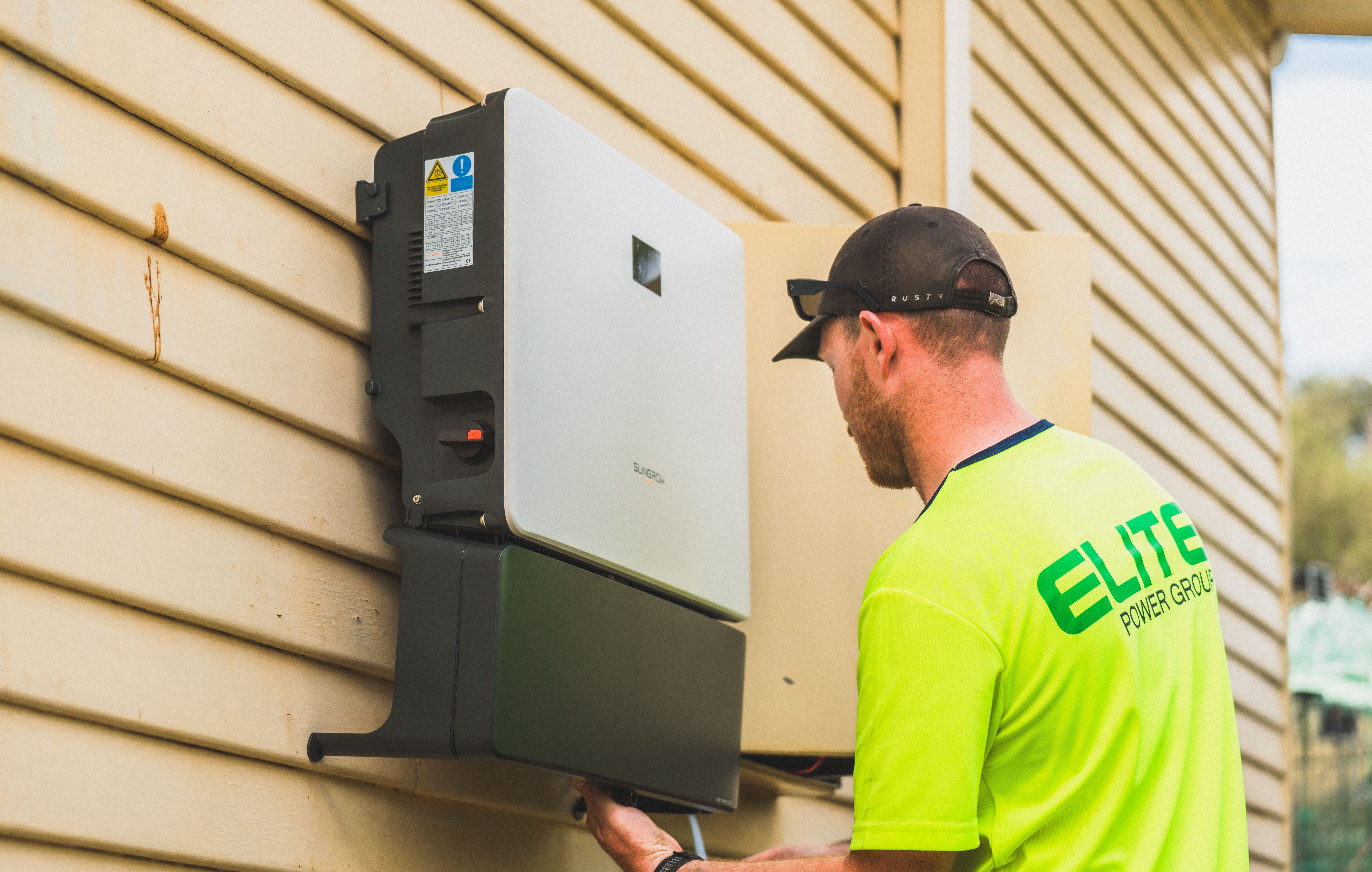
Quick Answer: How Many Appliances Can a 5kW Inverter Run?
Short answer: A 5kW solar inverter can supply up to roughly 5,000W of rated output, so the number of appliances depends on their combined running wattage. A typical home may run fans, lights, a refrigerator, TV, router and one inverter AC comfortably. Two ACs may also be possible if their actual combined load and startup requirements remain within the inverter’s specifications.
The important point is that 5kW does not mean a fixed number of appliances. Ten low-power appliances may use less electricity than two high-power appliances.
For example, four fans, several LED lights, a refrigerator, TV and internet router may use well below 1,500W. Add a large air conditioner and the load can increase substantially.
What Does a 5kW Inverter Actually Mean?
A 5kW inverter is primarily rated by the amount of electrical power it can deliver to connected AC loads. In simple terms:
5kW = 5,000 watts of rated power.
However, the exact usable capacity depends on the inverter’s datasheet. Some models have temporary overload or surge capabilities, while others have different continuous-output ratings for grid and backup operation.
For example, GoodWe’s GW5000-EH documentation lists a 5,000W nominal output and a separate temporary maximum output specification. This demonstrates why you should always check the exact inverter model instead of assuming every product labelled “5kW” behaves identically.
For a practical household installation, it is also sensible to leave some headroom instead of designing your normal load right at the inverter’s maximum rating.
Typical Appliance Load for a Pakistani Home
The following figures are planning estimates, not universal appliance specifications. Actual consumption varies by brand, model, operating mode, temperature, efficiency and load condition. For final sizing, check the appliance nameplate or manufacturer specification.
| Appliance | Approximate Running Load | Important Note |
|---|---|---|
| LED bulb | 8–15W | Usually a small load |
| Ceiling fan | 50–80W | Speed affects consumption |
| Wi-Fi router | 10–20W | Usually continuous |
| LED TV | 80–150W | Depends on screen size |
| Refrigerator | 100–250W while running | Compressor startup can be higher |
| Laptop | 45–150W | Depends on charger and usage |
| Washing machine | 300–1,000W+ | Motor/heater cycle matters |
| Water pump | 500–1,500W+ | Startup surge can be significant |
| Microwave oven | 1,000–1,500W+ | High short-duration load |
| Electric iron | 1,000–2,000W | High heating load |
| Inverter AC | Varies significantly | Use the manufacturer’s input rating |
Because appliance ratings vary so much, it is better to calculate your actual connected load than to decide that a 5kW inverter can run a certain number of appliances based only on their names.
5kW Inverter Appliance Combination Examples
Here are practical examples to show how the calculation works.
Example 1: Basic Home Load
| Appliance | Quantity | Planning Wattage | Estimated Total |
|---|---|---|---|
| Ceiling fans | 4 | 75W | 300W |
| LED lights | 8 | 12W | 96W |
| Refrigerator | 1 | 200W | 200W |
| LED TV | 1 | 120W | 120W |
| Wi-Fi router | 1 | 15W | 15W |
| Laptop | 1 | 65W | 65W |
| Approximate running load | 796W | ||
This is comfortably below 5kW. In a real home, additional appliances can be added, but motor and compressor loads should still be checked for startup surge.
Example 2: Basic Load + One AC
If the same home adds an AC with an assumed planning load of 1,500W:
796W + 1,500W = approximately 2,296W.
That leaves substantial room below a 5kW inverter’s rated output, although the AC’s actual input and starting behaviour should be checked before installation.
Example 3: Basic Load + Two ACs
If two ACs were each drawing approximately 1,500W at a particular operating point:
796W + 1,500W + 1,500W = approximately 3,796W.
This example is still below 5kW on a running-load basis. However, it does not mean every 5kW inverter can automatically run two ACs. AC power consumption changes with temperature, compressor speed and operating conditions, while startup or transient requirements can also matter.
This is why a two-AC installation should be checked against the specific inverter’s continuous output, surge capability, battery discharge capability and wiring/protection design.
How Many ACs Can a 5kW Inverter Run?
Short answer: There is no universal answer such as “exactly two ACs.” A 5kW inverter may run one AC very comfortably and may run two inverter ACs if their actual combined load remains within the inverter’s output capability and other household loads are controlled. Large or inefficient ACs can make two-AC operation unsuitable.
For example, a home might have:
- 1 or 2 inverter ACs
- 3–5 ceiling fans
- LED lighting
- Refrigerator
- TV
- Wi-Fi router
- Laptop or desktop computer
The key is not the appliance count. The key is the simultaneous wattage.
If two ACs are operating near high output while a water pump, microwave, iron or other heavy appliance is also switched on, the total load can approach or exceed the inverter’s limit.
For a home that regularly needs several high-power appliances simultaneously, moving to a larger inverter may be more appropriate than trying to operate a 5kW unit at its limit.
Why Startup Surge Matters
Running wattage is only part of the calculation. Appliances containing motors or compressors can briefly require more power when starting.
Examples include:
- Refrigerators
- Freezers
- Water pumps
- Air conditioners
- Some washing machines
This temporary increase is commonly called startup surge, starting current or inrush current.
Imagine your normal running load is 4,000W. That may appear safe on a 5kW inverter, but if a large motor starts while the AC compressor is also changing operating state, the inverter may experience a much higher instantaneous demand.
Modern inverter appliances can behave differently from traditional fixed-speed motors, so the correct approach is to use the manufacturer’s specifications rather than applying one generic surge multiplier to every appliance.
Our Inverter Sizing Calculator can be used to estimate running load and account for surge when comparing inverter sizes.
5kW Solar System vs 5kW Inverter: They Are Not the Same Thing
This is one of the most common sources of confusion.
A 5kW solar system and a 5kW inverter describe different parts of the system.
| Term | What It Describes |
|---|---|
| 5kW solar array | The nominal DC capacity of the solar panels |
| 5kW inverter | The inverter’s rated AC power conversion/output capacity |
| 5kWh battery | The battery’s stored energy capacity |
| 5kW load | The electrical power being consumed at that moment |
A solar array can sometimes have a DC capacity that differs from the inverter’s AC rating. The exact allowable panel capacity depends on the inverter’s maximum PV input specifications.
Likewise, having a 5kW inverter does not mean your solar panels are always producing 5kW. Solar generation changes with sunlight, temperature, shading, panel orientation and other conditions.
If you want to understand the energy production side of a 5kW system, see our guide on how much electricity a 5kW solar system generates per day.
Does a 5kW Inverter Run the Same Load at Night?
Not necessarily. The inverter’s output rating may remain 5kW, but the energy source available to the inverter changes.
During the day, a hybrid solar system may receive power from:
- Solar panels
- Battery
- Grid, depending on system configuration
At night, there is no direct solar generation. A hybrid system may therefore rely on the battery and/or grid depending on its operating mode.
This distinction is important because a battery must be capable of delivering the required power as well as storing enough energy for the desired backup duration.
A battery that has enough energy capacity for several hours does not automatically mean it can safely supply every high-power appliance at the same time. Battery voltage, maximum continuous discharge current, inverter limits and battery management system specifications all matter.
How to Calculate Your Own 5kW Inverter Load
The simplest method is to make a list of everything you expect to operate simultaneously.
- Write down every appliance.
- Record the actual wattage from its nameplate or manual.
- Multiply wattage by quantity.
- Add the appliances that may operate at the same time.
- Check startup or surge requirements for motors and compressors.
- Compare the result with the inverter’s continuous and surge ratings.
- Leave practical headroom for changing loads and future appliances.
The basic formula is:
Total running load = appliance wattage × quantity, added for all simultaneously operating appliances.
For example:
4 fans × 75W = 300W
8 lights × 12W = 96W
1 refrigerator × 200W = 200W
1 TV × 120W = 120W
1 AC × 1,500W = 1,500W
Total example running load = 2,216W.
This is only a planning example. Your appliances may have completely different ratings.
For a more detailed calculation, use our Solar Load Calculator and then verify the final inverter selection against the manufacturer’s datasheet.
What Can a 5kW Inverter Usually Run Together?
The following combinations are useful as general planning examples, not guarantees:
| Combination | 5kW Inverter Suitability | Why |
|---|---|---|
| Fans + lights + fridge + TV + router | Generally easy | Usually a relatively low running load |
| Fans + lights + fridge + TV + 1 inverter AC | Generally practical | Leaves useful headroom on many installations |
| Fans + lights + fridge + 2 inverter ACs | Model/load dependent | Actual AC input and simultaneous load matter |
| 2 ACs + water pump + iron + microwave | Potentially too much | Several high-power loads can exceed the inverter |
| Heavy electric heating loads + ACs | Often unsuitable | Heating appliances can consume large amounts of power |
The safest way to interpret this table is: count watts, not appliances.
What Appliances Should You Avoid Running Together on a 5kW Inverter?
You should be particularly careful when several high-power appliances operate simultaneously.
- Two or more high-load ACs
- Water pump
- Electric iron
- Microwave oven
- Electric heater
- Electric kettle
- Washing machine with a heating cycle
- Large compressor-based appliances
For example, switching on an electric iron and microwave while two ACs are already operating can push the instantaneous load much higher than the household’s normal background consumption.
If this is normal usage rather than an occasional event, consider a larger inverter or a load-management strategy.
5kW Inverter Capacity: What You Should Check Before Buying
Do not choose a 5kW inverter simply because a seller says “5kW is enough.” Ask for the actual datasheet and check:
- Continuous AC output power
- Backup output rating, if it is a hybrid inverter
- Maximum surge/overload capability
- Maximum PV input power
- Maximum PV input current
- Battery voltage and current limits
- Single-phase or three-phase configuration
- Operating temperature and derating information
- Required protection and installation specifications
These specifications can differ significantly between models carrying the same nominal 5kW label.
For grid-connected solar installations in Pakistan, electrical safety and applicable interconnection requirements should also be checked with the relevant distribution company and current regulatory guidance.
Common 5kW Inverter Sizing Mistakes
1. Assuming 5kW Means 5,000W of Solar Generation All Day
A 5kW inverter rating describes its power capacity. It does not mean the solar panels continuously produce 5,000W.
2. Counting Appliances Instead of Watts
Four fans may consume less power than one electric heater. Appliance quantity alone tells you very little about inverter sizing.
3. Ignoring Startup Surge
Motors and compressors can briefly demand more power when starting. This can matter even when the calculated running load appears safe.
4. Forgetting the Battery in a Hybrid System
If you want appliances to operate during a grid outage, check not only the inverter rating but also the battery’s continuous discharge capability.
5. Designing the System Exactly at 5kW
A home that constantly operates close to the inverter’s maximum rating has less room for additional appliances, load changes or operating conditions that cause derating.
6. Assuming Every 5kW Inverter Has the Same Specifications
Two products can both be marketed as 5kW while having different surge ratings, backup capabilities, battery voltage ranges and PV input limits. Always compare the official datasheets.
Related Solar Guides and Tools
If you are planning a complete 5kW system, these resources can help:
- 5kW Solar System: How Many Units Per Month in Pakistan?
- How Much Electricity Does a 5kW Solar System Generate Per Day?
- Solar Load Calculator
- Inverter Sizing Calculator
- 5kW Solar System Electricity Bill Savings Guide
These pages cover different parts of the same decision: how much electricity your home consumes, how much a 5kW system can generate, and how to select the right inverter capacity.
Frequently Asked Questions
Can a 5kW inverter run a refrigerator and AC together?
Yes, in many installations a 5kW inverter can run a refrigerator and an AC together, along with smaller household loads. The actual AC input power and refrigerator startup requirement should be checked against the inverter’s continuous and surge ratings.
Can a 5kW inverter run two ACs?
It can be possible when the two ACs have suitable actual input ratings and the remaining household load stays within the inverter’s capacity. However, two ACs should not automatically be assumed safe just because the inverter is labelled 5kW.
Can a 5kW inverter run a water pump?
Yes, provided the pump’s running and starting requirements are compatible with the inverter. Water pumps can have significant startup demand, so check the inverter’s surge capability and the pump’s motor specifications.
How many fans can a 5kW inverter run?
From a pure running-wattage perspective, a 5kW inverter can supply many typical ceiling fans because individual fans usually consume far less than 1,000W. The final number still depends on what other appliances are operating at the same time.
Can a 5kW inverter run a fridge, fans, lights and TV?
Yes. These are relatively modest household loads compared with the 5kW rating when used in normal quantities. The refrigerator’s compressor startup should still be considered when checking the inverter’s surge capability.
Can I run an electric iron on a 5kW inverter?
Usually yes if the rest of the simultaneous load is low enough. An electric iron can consume around 1,000–2,000W depending on the model, so it can use a significant portion of the available inverter capacity.
Can a 5kW inverter run a microwave?
Often yes, but a microwave can be a high-power appliance. Check its electrical input rating and avoid combining it with several other heavy loads if the total approaches the inverter’s rated output.
Does a 5kW inverter need a battery?
No. A 5kW inverter does not automatically require a battery. On-grid systems can operate without battery storage, while hybrid or backup systems use batteries when energy storage and outage backup are required.
Is a 5kW inverter enough for a normal Pakistani house?
For many homes, a 5kW inverter can be a practical size for normal lighting, fans, refrigerator, electronics and selected high-power appliances. Whether it is enough for your particular home depends on your simultaneous load, number of ACs, pumps, heating appliances and backup requirements.
What is the maximum load on a 5kW inverter?
The nominal maximum is generally around 5,000W for a 5kW inverter, but the exact continuous and temporary overload limits depend on the model. Always use the manufacturer’s datasheet rather than assuming every 5kW inverter has identical limits.
Is a 5kW solar system the same as a 5kW inverter?
No. A 5kW solar system normally refers to the nominal capacity of the solar array, while a 5kW inverter refers to the inverter’s rated power output. The panel capacity and inverter capacity can be designed differently within the manufacturer’s specifications.
Final Takeaway
A 5kW solar inverter can run a large number of everyday household appliances, but there is no fixed appliance count. The correct answer comes from adding the wattage of the appliances you expect to use simultaneously and then checking startup surge and the inverter’s actual specifications.
For many Pakistani homes, fans, lights, refrigerator, TV, router and one inverter AC are comfortably within the type of load a 5kW inverter can handle. Two ACs may also be possible, but the decision should be based on their real input ratings and the rest of the household load rather than the number of appliances alone.
The best rule is simple: calculate your watts first, then choose the inverter. If your normal simultaneous load is regularly close to 5kW, a larger inverter or better load management may be a safer choice.

Waseem Abbas is the Founder and Solar Research Editor at Solar Pakistan Guide, where he researches Pakistan’s solar energy market and publishes practical guides on solar panels, inverters, batteries, net metering, and solar system costs. His goal is to provide accurate, regularly updated, and easy-to-understand information that helps homeowners and businesses make informed solar energy decisions.
Areas of Expertise: Solar Panels • Solar Inverters • Batteries • Net Metering • Solar System Costs • Renewable Energy