
5kW Solar System: How Many Units Per Month in Pakistan? A properly designed 5kW solar system in Pakistan can typically generate around 600 to 675 units of electricity per month as a practical planning estimate. A broader real-world range of roughly 550 to 700 units per month is reasonable because production changes with location, season, shading, dust, panel orientation, temperature, and system losses.
If you are considering solar for a home, the important point is that a 5kW system does not produce exactly the same number of units every month. Your actual generation depends on how much sunlight reaches the panels and how efficiently the complete system converts that sunlight into usable electricity.
This guide explains the expected monthly and daily output, how to calculate generation, why production varies across Pakistan, and how to compare a 5kW system with your own electricity consumption.
Table of Contents
- How Many Units Does a 5kW Solar System Produce Per Month?
- How Many Units Does a 5kW Solar System Produce Per Day?
- How to Calculate 5kW Solar System Generation
- What Affects 5kW Solar Generation in Pakistan?
- Does Generation Vary by City?
- Does Solar Generation Change by Season?
- Is a 5kW Solar System Enough for 500 or 600 Units?
- How Net Billing Changes the Importance of Solar Generation
- How to Get More Units From a 5kW Solar System
- Common Mistakes When Estimating Solar Units
- Frequently Asked Questions
- Final Takeaway
How Many Units Does a 5kW Solar System Produce Per Month?
Short answer: A 5kW solar system in Pakistan can generally produce around 550 to 700 units (kWh) per month under reasonably good installation and sunlight conditions. For planning purposes, approximately 600 to 675 units per month is a useful working estimate, but actual production can be lower or higher depending on location, weather, shading, panel direction, temperature and system losses.
| Measurement | Practical Estimate |
|---|---|
| System size | 5 kW |
| Typical monthly generation | About 550–700 units |
| Useful planning range | About 600–675 units/month |
| Average daily equivalent | About 18–23 units/day |
| Approximate annual generation | About 6,600–8,400 units/year |
These figures are planning estimates, not a production guarantee. Current Pakistan solar guides and system-sizing references commonly place a well-installed 5kW system in roughly this production range. One recent Pakistan-focused analysis estimates approximately 600–675 units per month, while other current estimates use about 600–700 units as a practical range.
How Many Units Does a 5kW Solar System Produce Per Day?
Short answer: A 5kW solar system can produce roughly 18 to 23 units per day on average when the monthly output is around 550–700 units. Daily generation is not constant, however. A clear sunny day can produce substantially more than a cloudy, dusty or heavily shaded day.
The term unit on an electricity bill normally means one kilowatt-hour (kWh). Therefore:
1 electricity unit = 1 kWh.
If a system produces 20 kWh in one day, that is 20 electricity units. If it produces 650 kWh during a billing month, that is 650 units.
How to Calculate 5kW Solar System Generation
A simple way to understand solar production is to start with the system’s rated capacity and the equivalent productive sunlight available at the site, then account for system losses.
A simplified calculation is:
Daily solar generation ≈ System size × equivalent sun hours × system performance factor
For example, if a 5kW system has roughly 5 equivalent productive sun-hours available on a particular day and the complete system operates below its laboratory-rated output because of normal losses:
5 × 5 × performance factor = actual daily generation.
The important point is that 5kW does not mean the system produces 5 units every hour of daylight. Solar panels are rated under standard test conditions, while real rooftops experience changing sunlight, heat, dust, wiring losses, inverter losses and shading.
This is why two homes with nominally identical 5kW systems can record different monthly generation.
What Affects 5kW Solar Generation in Pakistan?
Several factors can change the number of units generated by a 5kW system.
1. Location
Pakistan has strong solar resources, but the available solar energy varies between regions. Karachi, Lahore, Islamabad, Multan, Quetta and other locations do not receive identical sunlight throughout the year.
A system installed in a location with stronger solar irradiation can produce more electricity than the same system in a location with less favourable conditions.
2. Panel Orientation and Tilt
The direction and angle of the panels affect how much sunlight they receive. Poor orientation can reduce production even when the panels themselves are high quality.
The installer should evaluate the roof, surrounding buildings, water tanks, trees and other obstacles before finalizing the panel layout.
3. Shading
Shading is one of the most important practical issues. A nearby building, tree, parapet wall or water tank can reduce the sunlight reaching part of the array.
Even partial shading can have a noticeable effect depending on the panel layout, string design and inverter technology.
4. Dust and Dirt
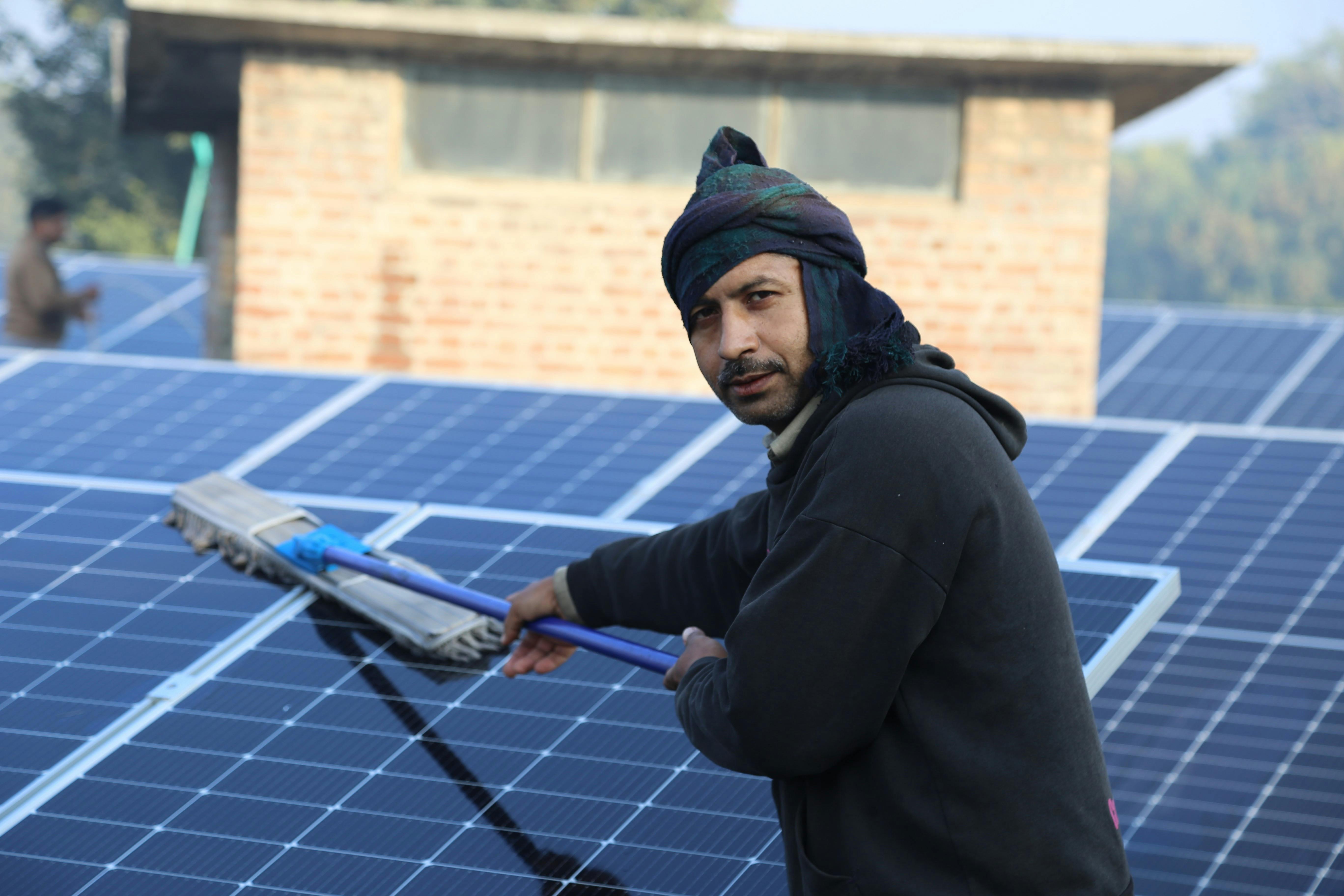
Dust accumulation can reduce the amount of sunlight reaching the photovoltaic cells. Pakistan’s dusty and dry conditions make regular inspection and appropriate cleaning important.
Cleaning should be carried out safely and according to the panel manufacturer’s recommendations. Do not use abrasive materials that could damage the panel surface.
5. Temperature
Solar panels are tested under standardized laboratory conditions. Real rooftop temperatures can be much higher, particularly during Pakistan’s summer months. Panel electrical output generally decreases as cell temperature rises.
6. Inverter and Electrical Losses
Not all electricity generated by the solar array reaches your appliances as usable AC electricity. Energy can be lost through the inverter, cables, connectors and other components.
This is one reason a real-world production estimate should not simply multiply 5kW by the number of daylight hours.
7. Weather
Clouds, fog, rain, haze and dust can all reduce daily solar production. A single cloudy day does not indicate that a system is defective. Solar generation should be evaluated over weeks and months rather than from one day’s production.
Does Generation Vary by City?
Yes. Location can make a meaningful difference to solar production. A 5kW system installed in Karachi may not produce exactly the same number of units as a similar system in Lahore or Islamabad.
Current Pakistan-focused solar output estimates show city-level differences for identical system sizes. One published calculation, for example, estimates different monthly output for 5kW systems in Lahore, Karachi and Islamabad because of differences in long-term solar resource and rooftop conditions.
| Factor | Why It Matters |
|---|---|
| City and solar resource | Changes the amount of usable sunlight available |
| Roof direction | Determines how directly panels receive sunlight |
| Roof shading | Can reduce generation from affected panels |
| Dust and cleaning | Dirty panels can receive less sunlight |
| Temperature | High panel temperatures can reduce electrical output |
| Inverter and wiring | System losses affect final usable production |
Does Solar Generation Change by Season?
Yes. Monthly solar production changes throughout the year. A 5kW system should not be expected to generate exactly the same number of units every month.
Winter can bring shorter days, lower sun angles, fog and cloudy conditions in some parts of Pakistan. Summer provides longer days and strong sunlight, although very high temperatures, dust and weather conditions can also affect performance.
Monsoon weather can temporarily reduce output because clouds and rain limit the sunlight reaching the panels.
For this reason, comparing your system with a single monthly target is less useful than looking at daily production trends, monthly production and annual generation.
Is a 5kW Solar System Enough for 500 or 600 Units?
For many homes, a 5kW system can be a reasonable size for electricity consumption around 500–600 units per month, but the answer depends on when you use electricity. A household using most of its electricity during daylight can directly consume more solar generation, while a household with heavy nighttime consumption may need grid electricity or battery storage even when total monthly solar generation is similar to monthly consumption.
| Monthly Home Consumption | How a 5kW System May Compare |
|---|---|
| 300–400 units | Potentially more solar generation than annual consumption, depending on site conditions |
| 400–500 units | 5kW may provide substantial annual offset |
| 500–600 units | Often a useful range to evaluate for a 5kW system |
| 600–700 units | Can be close to the system’s expected generation under good conditions |
| 700+ units | A larger system may need to be evaluated based on actual consumption and roof constraints |
Do not size a system from the number of air conditioners, fans or rooms alone. Your electricity bill provides a much better starting point because it shows actual energy consumption.
Before buying, calculate your average monthly units from several recent bills and examine how much electricity you use during daylight hours.
For a broader discussion of system sizing, see our solar system price and sizing guide in Pakistan.
How Net Billing Changes the Importance of Solar Generation
There is an important policy change that solar buyers should understand in 2026.
NEPRA notified the Prosumer Regulations, 2026 on February 9, 2026. Under the regulations, electricity supplied by a prosumer to the licensee is accounted for separately from electricity supplied by the licensee to the prosumer, with exported electricity credited according to the applicable national average energy purchase price mechanism. NEPRA has subsequently published amendments to the 2026 Prosumer Regulations, including an amendment dated August 6, 2026.
This means that solar generation and solar savings are not exactly the same thing. A system may generate 650 units in a month, but the financial value of those units depends on how many you consume directly, how many you export, the applicable tariff and the prevailing regulatory mechanism.
Therefore, when comparing systems, look beyond the headline number of monthly units.
- How much electricity do you use during daylight?
- How much electricity do you use after sunset?
- How much solar electricity can you consume directly?
- How much surplus electricity is likely to be exported?
- Would battery storage change your consumption pattern?
- What rules and rates apply to your connection at the time of installation?
You can also read our detailed guide to Pakistan’s 2026 net metering and Prosumer rules for the regulatory background.
How to Get More Units From a 5kW Solar System
You cannot control the amount of sunlight available, but you can reduce avoidable losses.
- Keep the array as free from shade as practical. Check the roof throughout the day before installation.
- Use an appropriate panel layout. Avoid placing panels where tanks, walls or other structures will regularly shade them.
- Keep panels reasonably clean. Dust and dirt can reduce sunlight reaching the cells.
- Use properly sized cables and protection equipment. Poor electrical design can increase losses and create safety problems.
- Choose a suitable inverter. The inverter should be properly matched to the array and household requirements.
- Monitor production. Regularly checking daily and monthly generation makes it easier to identify unusual drops.
- Check the installation after major weather events. Strong winds, heavy rain and construction work around the roof can affect equipment.
For solar component research, our solar panel price guide for Pakistan can be used alongside the generation estimate.
Common Mistakes When Estimating Solar Units
Assuming 5kW Means a Fixed Number of Units
A 5kW rating describes system capacity; it does not guarantee a fixed monthly energy output. Weather, location and system conditions change the result.
Using Daylight Hours Instead of Equivalent Sun Hours
Solar panels receive different levels of sunlight from morning to evening. Twelve hours of daylight does not mean twelve hours at maximum rated solar intensity.
Ignoring Shading
A roof that looks sunny at noon can still experience shade in the morning or afternoon. A site survey should consider the full solar path.
Comparing Generation With Bill Units Without Considering Timing
Producing 600 units does not necessarily mean your grid bill will fall by exactly 600 units. The timing of solar production and household consumption matters, particularly under the current prosumer billing framework.
Expecting Installer Advertisements to Be Guarantees
Generation figures advertised by installers are normally estimates. Ask how the estimate was calculated and whether it accounts for your location, roof orientation, shading and system losses.
Frequently Asked Questions
How many units does a 5kW solar system produce per month in Pakistan?
A 5kW solar system can generally produce around 550 to 700 units per month in Pakistan under reasonably good conditions. Around 600–675 units is a useful planning range, but actual output varies by location, season, shading, dust, temperature and equipment.
How many units does a 5kW solar system produce per day?
Based on a monthly production range of 550–700 units, the daily average works out to roughly 18–23 units per day. Individual days can be significantly higher or lower because solar production changes with weather and sunlight.
Can a 5kW solar system produce 700 units per month?
Yes, 700 units in a month can be achievable under favourable conditions, but it should not be treated as a guaranteed monthly output. Location, sunlight, panel orientation, temperature, shading and system losses all affect production.
Is a 5kW solar system enough for 600 units per month?
It can be a reasonable system size to evaluate for a household using around 600 units per month because its expected annual production can be in a similar range. However, the final decision should also consider daytime consumption, roof conditions, sanctioned load and whether battery storage is required.
Does a 5kW solar system produce the same units every month?
No. Solar production changes with season, weather, sunlight duration, temperature, dust and shading. A better way to evaluate performance is to compare production over several months rather than expecting an identical monthly figure.
Why does my 5kW solar system produce fewer units than expected?
Possible causes include shading, dirty panels, poor orientation, high temperatures, equipment losses, inverter limitations, wiring issues, cloudy weather or incorrect production expectations. Check the system’s monitoring data and compare production over an appropriate period before concluding that there is a fault.
How many solar panels are needed for a 5kW system?
The number depends on the wattage of the panels selected. For example, higher-wattage modern modules require fewer panels than lower-wattage modules. The final panel count should be based on the panel’s actual rated capacity and the inverter’s design.
Does a 5kW system work during a grid outage?
A standard grid-tied inverter normally shuts down when the grid is unavailable because of electrical safety requirements. A hybrid system designed with suitable backup capability can operate selected loads from batteries and solar during an outage, subject to its design and installation.
Are solar units the same as electricity units on a Pakistan bill?
Yes. In normal household electricity billing, one unit represents one kilowatt-hour (kWh). Therefore, 650 kWh of solar generation is commonly described as 650 solar units.
Final Takeaway
A 5kW solar system in Pakistan can typically be planned around 550–700 units per month, with approximately 600–675 units serving as a useful working estimate for a reasonably well-designed installation. That translates to roughly 18–23 units per day on a monthly-average basis.
The number should never be treated as a guaranteed production figure. Your city, roof orientation, shading, temperature, dust, weather, panel configuration, inverter and electrical losses all influence actual generation.
If your home uses around 500–600 units per month, compare your electricity consumption with the expected solar generation over a full year rather than relying on one month’s bill. Also consider how much electricity you use during daylight and how current Prosumer/net-billing rules affect exported energy.
The most reliable starting point is your own electricity history: calculate your average monthly units, inspect your roof for shade, and obtain a site-specific production estimate before purchasing a system.

Waseem Abbas is the Founder and Solar Research Editor at Solar Pakistan Guide, where he researches Pakistan’s solar energy market and publishes practical guides on solar panels, inverters, batteries, net metering, and solar system costs. His goal is to provide accurate, regularly updated, and easy-to-understand information that helps homeowners and businesses make informed solar energy decisions.
Areas of Expertise: Solar Panels • Solar Inverters • Batteries • Net Metering • Solar System Costs • Renewable Energy