
How Long Does a Solar Battery Last in Pakistan? For most home solar systems, a reasonable planning range is around 5–10 years for lead-acid batteries and 10–15 years for lithium-ion batteries. Actual life can be shorter or longer depending on battery chemistry, daily cycling, depth of discharge, temperature, charging settings, installation quality, and the manufacturer’s warranty.
Pakistan’s hot climate makes battery temperature especially important. A battery that is regularly exposed to excessive heat or repeatedly discharged very deeply can lose usable capacity faster than a battery operated under controlled conditions.
This guide explains the difference between calendar life and cycle life, compares tubular and lithium batteries, explains how heat affects battery performance, and shows the practical signs that a solar battery may need replacement.
How Long Does a Solar Battery Last in Pakistan?
Short answer: A solar battery in Pakistan can commonly last about 5–10 years if it is lead-acid and around 10–15 years if it is lithium-ion. These are broad planning ranges, not guarantees. Daily cycling, high temperature, deep discharge, charging conditions, battery quality, and maintenance can significantly change the actual service life.
For a household using the battery every day, the most important question is not simply “How many years?” You should also check the battery’s cycle life, usable capacity, depth-of-discharge rating, warranty and operating-temperature limits.
| Battery Type | Typical Planning Life | Main Advantage | Main Limitation |
|---|---|---|---|
| Lead-acid | About 5–10 years average | Lower upfront cost | Shorter life under frequent deep cycling and greater maintenance needs |
| Tubular lead-acid | Often toward the lower end of lead-acid ranges when heavily cycled | Common and relatively affordable for backup | Deep cycling, heat and maintenance can reduce service life |
| Lithium-ion | About 10–15 years average | Longer life and higher usable capacity | Higher initial cost |
| LiFePO4 | Can provide long cycle life when operated within manufacturer specifications | Good cycle durability and deep-discharge capability | Quality, BMS and thermal management matter |
Government energy guidance gives average lifespans of approximately 5–10 years for lead-acid batteries and 10–15 years for lithium-ion batteries. It also notes that a battery charged and discharged every day will generally need replacement sooner than one used occasionally.
Solar Battery Life by Battery Type
Tubular Lead-Acid Battery
Tubular batteries are still a familiar option in Pakistan because their initial purchase price is generally lower than a comparable lithium storage system.
Lekin low purchase price ka matlab yeh nahi ke lifetime cost bhi hamesha low hogi. Agar tubular battery ko roz deep discharge kiya jaye, high temperatures mein operate kiya jaye, ya charging system properly configured na ho, to usable capacity decline relatively quickly ho sakti hai.
For households using a tubular battery mainly for occasional load-shedding backup, its service life can be quite different from a household that charges and discharges it heavily every day.
Lithium and LiFePO4 Batteries
Lithium-ion batteries generally provide a longer service life than lead-acid batteries. LiFePO4, or lithium iron phosphate, is one lithium chemistry commonly used in stationary energy-storage applications.
Some manufacturers specify thousands of cycles before a battery reaches a specified remaining-capacity threshold. For example, a Pakistani public-sector solar tender specified a minimum of 5,750 cycles at 50% depth of discharge for LiFePO4 batteries before reaching 80% of initial capacity. That figure is a specification under defined test conditions, not a guarantee that every residential battery in Pakistan will achieve the same result.
Is liye battery choose karte waqt sirf “6,000 cycles” ya “10-year life” dekhna enough nahi hai. Check karein ke cycle rating kis DoD, temperature, charge/discharge rate and end-of-life capacity par based hai.
Calendar Life vs Cycle Life: Dono Alag Hain
Solar battery ki life ko samajhne ke liye do terms important hain: calendar life aur cycle life.
Calendar Life
Calendar life simply battery ki age ko years mein describe karti hai. Battery use kam bhi ho, phir bhi chemical aging hoti rehti hai.
Cycle Life
Cycle life batati hai ke battery kitne charge-discharge cycles complete kar sakti hai before reaching a specified performance or capacity threshold.
For example, agar kisi battery ki rated cycle life 5,000 cycles hai aur aap theoretical tor par one full cycle per day use karte hain:
5,000 ÷ 365 ≈ 13.7 years
Lekin is calculation ko guaranteed lifespan na samjhein. Real systems mein partial cycles, temperature, charging conditions, battery age, inverter efficiency and the manufacturer’s end-of-life definition sab result ko change karte hain.
Battery manufacturers and energy authorities may define useful life using years, cycles, energy throughput, or a combination of these measurements. Warranty terms should therefore be read alongside the cycle-life specification.
Does Pakistan’s Heat Reduce Solar Battery Life?
Short answer: Yes. High operating temperatures can accelerate battery degradation, although the exact effect depends on battery chemistry, temperature duration, state of charge, charging conditions and thermal management.
Pakistan ke hot areas mein yeh factor particularly important hai. Rooftop solar equipment may be exposed to strong sunlight and high ambient temperatures, but battery ko unnecessarily hot location mein install karna avoid karna chahiye.
Battery storage ke liye better approach yeh hai ke manufacturer ke specified operating-temperature range ko follow kiya jaye aur battery ko aisi location mein install kiya jaye jahan excessive heat accumulation na ho.
Lead-acid batteries are particularly sensitive to operating conditions, while lithium batteries also degrade faster at elevated temperatures. Temperature control is therefore not just a comfort issue; it is part of battery-life management.
Pakistan-specific practical point: Battery ko direct rooftop sunlight, poorly ventilated enclosed spaces, ya unnecessarily hot rooms mein install karna long-term performance ke liye poor practice ho sakti hai. Installation location battery manufacturer’s instructions ke mutabiq select karein.
What Factors Affect Solar Battery Lifespan?
Battery ki actual life ek single number se determine nahi hoti. Yeh major factors sab se important hain:
- Battery chemistry: Lithium-ion and lead-acid batteries age differently.
- Depth of discharge: Regularly using a larger percentage of the battery’s capacity can increase stress and affect life.
- Temperature: Excessive heat accelerates degradation.
- Charge settings: Incorrect charging voltage or current can damage a battery or reduce its useful life.
- Daily cycling: A battery used every day generally accumulates cycles faster than an emergency-only battery.
- Battery quality: Cell quality, manufacturing consistency and protection systems matter.
- Battery Management System: Lithium batteries rely on a BMS for functions such as voltage, temperature and protection management.
- Inverter compatibility: Incorrect battery-inverter settings can cause poor charging or discharging behavior.
- Installation: Wiring, ventilation, protection equipment and installation quality all matter.
- Storage conditions: Batteries can age even when they are not heavily cycled.
Why Depth of Discharge Matters
Depth of Discharge (DoD) means how much of a battery’s available capacity has been used.
For example, if a 10 kWh battery supplies approximately 5 kWh before being recharged, that represents roughly 50% DoD for that cycle.
Repeatedly taking a battery very close to empty can place more stress on the battery than shallower cycling. The exact recommended DoD depends on the battery chemistry and manufacturer.
| Term | Simple Meaning | Why It Matters |
|---|---|---|
| 100% DoD | Almost the entire rated capacity is used | Deep cycling can affect longevity depending on battery chemistry |
| 80% DoD | About 80% of rated capacity is used | Common specification point for many lithium battery products |
| 50% DoD | About half of rated capacity is used | Often associated with conservative lead-acid operation |
Important: DoD values should not be treated as universal rules. Always follow the battery manufacturer’s recommended operating range.
Tubular vs Lithium Battery Lifespan in Pakistan
Agar aap Pakistan mein daily solar backup ke liye battery select kar rahe hain, tubular aur lithium ke darmiyan difference sirf price ka nahi hai. Lifetime, usable capacity, maintenance, charging behavior and cycle performance bhi compare karna chahiye.
| Factor | Tubular Lead-Acid | LiFePO4 Lithium |
|---|---|---|
| Typical lifespan | Generally shorter | Generally longer |
| Cycle durability | Lower than many lithium systems | Usually much higher |
| Usable capacity | Usually more conservative | Generally higher usable portion, subject to manufacturer specification |
| Maintenance | Some types require electrolyte/water maintenance | Generally low maintenance |
| Weight | Heavy | Usually much lighter for equivalent usable storage |
| Upfront cost | Lower | Higher |
| Best fit | Budget-conscious or occasional backup | Frequent cycling and long-term storage |
For a household that expects frequent daily battery cycling, lithium can make more sense over the long term because its higher cycle life and usable capacity can offset its higher initial purchase price.
For occasional backup where the battery is not heavily cycled, a properly selected lead-acid battery can still be a practical option.
Before comparing prices, see our solar battery price in Pakistan 2026 guide for battery types, capacity and current market considerations.
How to Make a Solar Battery Last Longer
Battery lifespan ko improve karne ke liye expensive tricks ki zaroorat nahi. Correct installation and operating conditions usually matter much more.
- Avoid unnecessary deep discharge. Battery ko regularly extreme low state of charge tak na le jayein unless the manufacturer specifically allows it.
- Keep temperature under control. Battery ko excessive heat se protect karein and manufacturer operating-temperature limits follow karein.
- Use the correct charging profile. Inverter and charger settings battery manufacturer’s specifications ke according honi chahiye.
- Check battery-inverter compatibility. Lithium batteries ke liye compatible communication and BMS settings especially important hain.
- Keep lead-acid batteries maintained. Agar battery type electrolyte/water maintenance require karti hai, manufacturer ki maintenance instructions follow karein.
- Do not ignore warning signs. Unexpected capacity loss, overheating, swelling, leakage or unusual behavior ko immediately investigate karein.
- Use suitable protection equipment. Installation mein appropriate electrical protection and isolation equipment hona chahiye.
- Keep records. Battery installation date, warranty, model number and major service information save karke rakhein.
For calculating expected backup rather than battery lifespan, you can also use our Battery Backup Time Calculator.
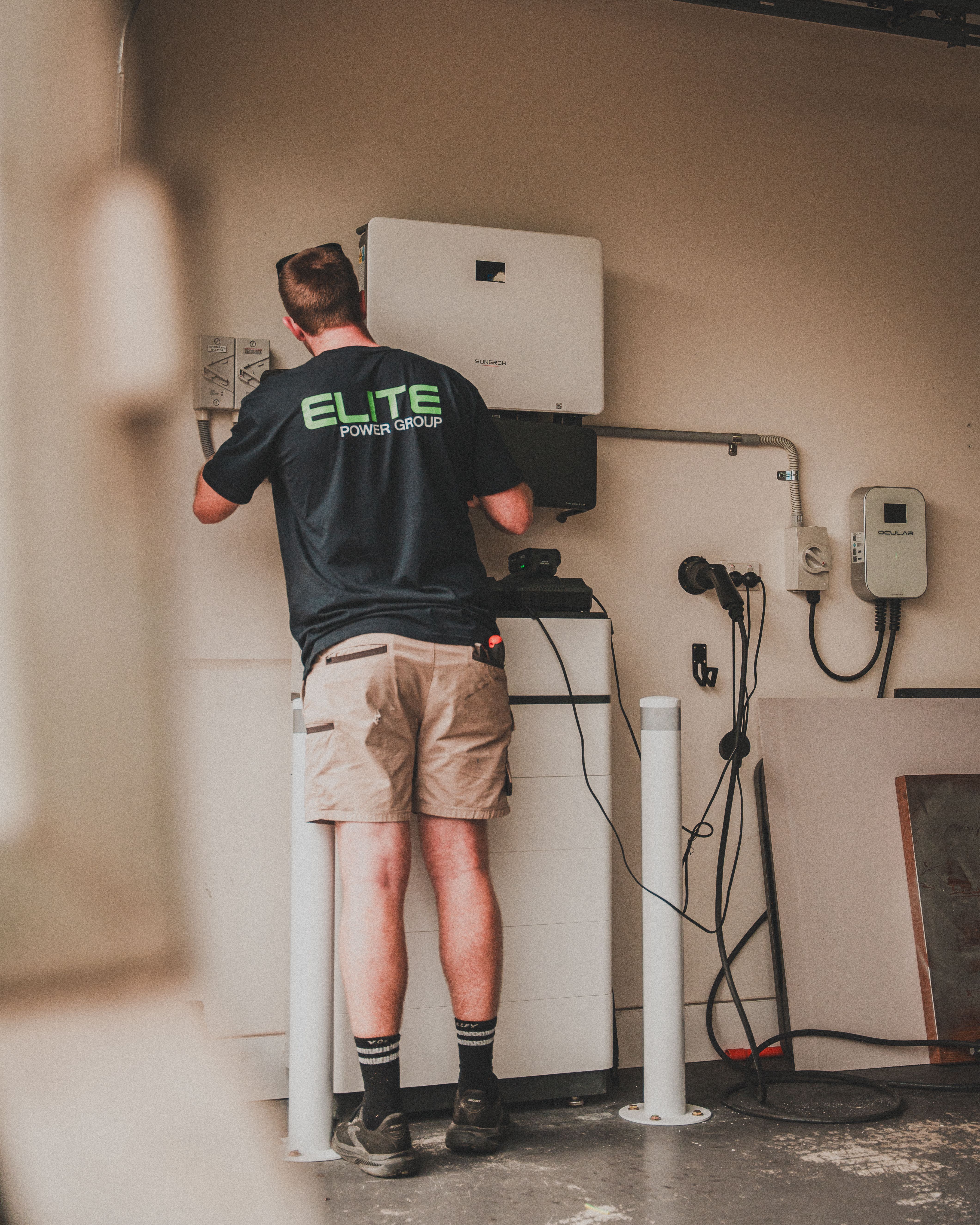
Image: Example of a professionally installed residential battery system. Image source: Pexels.
When Should You Replace a Solar Battery?
A battery does not necessarily become useless on a specific birthday. In many cases, replacement becomes sensible when its usable capacity or performance has fallen enough that it no longer meets your household’s requirements.
Common warning signs include:
- Backup time has noticeably decreased compared with when the battery was new.
- The battery reaches low-voltage protection much earlier than expected.
- Charging takes unusually long.
- The inverter reports repeated battery-related faults.
- The battery shows abnormal heating.
- A lead-acid battery has physical damage, leakage or serious deterioration.
- A lithium battery’s BMS repeatedly reports protection events.
- The manufacturer’s warranty or specified service-life limit has been reached.
Safety warning: Swollen, leaking, physically damaged or abnormally hot batteries should not be opened or repaired by an unqualified person. Get the system inspected by a qualified solar/electrical professional.
What to Check Before Buying a Solar Battery
Battery khareedte waqt seller se sirf “kitne saal chalegi?” na poochein. Yeh questions zyada useful hain:
- What is the battery chemistry?
- What is the rated capacity in kWh or Ah?
- What is the recommended usable capacity?
- What is the rated cycle life?
- At what DoD is the cycle rating specified?
- What is the end-of-life capacity used for the cycle rating?
- What temperature range is allowed?
- What is the product warranty?
- What capacity is guaranteed at the end of the warranty?
- Does the battery require communication with the inverter?
- Is the BMS included?
- Who provides warranty service in Pakistan?
- Is the model number and manufacturing information documented?
Battery warranties may be based on a fixed number of years, cycle count, energy throughput, or a combination of these. Some warranties also specify the minimum capacity the battery should retain at the end of the warranty period.
What Does Battery Lifespan Mean for Solar Users in Pakistan?
Pakistan mein battery ka decision aapke solar system ke use-case par depend karta hai.
If You Only Need Occasional Backup
Agar battery sirf occasional load shedding ke waqt use hoti hai, a lower-cost lead-acid option may be reasonable if its maintenance and installation requirements suit your home.
If You Cycle the Battery Every Day
Agar battery roz solar energy store karti hai aur raat ko discharge hoti hai, cycle life becomes much more important. In this situation, a quality lithium/LiFePO4 system may offer a better long-term fit despite its higher upfront cost.
If You Are Building a Hybrid Solar System
Hybrid systems mein battery sizing sirf inverter size dekh kar nahi karni chahiye. Evening load, overnight consumption, backup requirement, desired autonomy and battery chemistry ko together evaluate karein.
Agar aap apna complete system plan kar rahe hain, Solar Load Calculator se load estimate kar sakte hain aur phir battery backup requirement calculate karne ke liye Battery Backup Time Calculator use kar sakte hain.
Pakistan’s electricity-market rules have also changed in 2026, so battery economics can depend on how much solar electricity you use yourself versus export to the grid. For current regulatory details, check the official NEPRA regulations rather than relying on an old battery-buying article.
Frequently Asked Questions
How many years does a solar battery last in Pakistan?
A broad planning range is around 5–10 years for lead-acid batteries and 10–15 years for lithium-ion batteries. Actual lifespan depends on cycling, temperature, depth of discharge, charging conditions, battery quality and maintenance.
How long does a lithium solar battery last?
A good lithium-ion solar battery can commonly be planned around a 10–15 year service life, although individual products can differ substantially. Check the manufacturer’s cycle rating, warranty period and end-of-warranty capacity rather than relying only on a year figure.
How long does a tubular battery last in Pakistan?
Tubular batteries are a type of lead-acid battery. Their actual service life depends heavily on how deeply and frequently they are discharged, temperature, charging quality and maintenance. A daily-cycled tubular battery may reach the lower end of general lead-acid lifespan expectations sooner than an occasionally used battery.
Does hot weather reduce solar battery life?
Yes. Excessive temperature can accelerate battery degradation. This is particularly important in Pakistan, where summer temperatures can be high. Proper installation location, ventilation or thermal management where required, and following the manufacturer’s temperature limits can help protect battery life.
Is lithium better than tubular for solar?
For frequent daily cycling and long-term use, lithium—especially LiFePO4—will often be the stronger choice because of its longer cycle life and higher usable capacity. Tubular lead-acid can still make sense when upfront budget is the main concern or backup use is relatively limited.
How many cycles can a solar battery last?
There is no single cycle-life number for all solar batteries. Different products can have very different ratings. Always check the cycle count together with the specified DoD, temperature, charge/discharge conditions and end-of-life capacity.
Can a solar battery last 10 years?
Yes. Many lithium solar batteries are designed around a 10-year or longer service period, while lead-acid batteries can also last many years under suitable conditions. Whether a particular battery reaches 10 years depends on its chemistry, usage pattern and operating environment.
When should I replace my solar battery?
Consider replacement when the battery can no longer provide the backup capacity you need, its usable capacity has fallen significantly, it reaches the manufacturer’s specified end-of-life condition, or it develops a safety or reliability problem.
Does a bigger battery last longer?
Not automatically. A larger battery may experience shallower discharge for the same household load, which can help in some system designs, but battery quality, chemistry, temperature and charging settings remain important. Correct sizing is better than simply buying the largest battery.
Final Takeaway
The answer to how long a solar battery lasts in Pakistan depends mainly on battery chemistry and operating conditions. As a practical starting point, plan around 5–10 years for lead-acid and 10–15 years for lithium-ion, while understanding that daily cycling and Pakistan’s heat can change the real result.
If your battery will be used every day, focus on cycle life, DoD, temperature limits, warranty, end-of-warranty capacity and BMS quality rather than choosing solely by purchase price.
For many households, the better long-term question is not “Which battery is cheapest?” but “Which battery can deliver the required usable energy reliably for the years I plan to use my solar system?”

Waseem Abbas is the Founder and Solar Research Editor at Solar Pakistan Guide, where he researches Pakistan’s solar energy market and publishes practical guides on solar panels, inverters, batteries, net metering, and solar system costs. His goal is to provide accurate, regularly updated, and easy-to-understand information that helps homeowners and businesses make informed solar energy decisions.
Areas of Expertise: Solar Panels • Solar Inverters • Batteries • Net Metering • Solar System Costs • Renewable Energy